绳子与重物
时间限制: 400 ms
内存限制: 64 MB
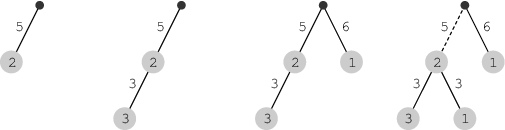
有N条绳子编号 0 至 N - 1,每条绳子后面栓了一个重物重量为Wi,绳子的最大负重为Ci。每条绳子或挂在别的绳子下或直接挂在钩子上(编号-1)。如果绳子下所有重物的重量大于绳子的最大负重就会断掉(等于不会断)。依次给出每条绳子的负重Ci、重物的重量Wi以及绳子会挂在之前的哪条绳子的下面,问最多挂多少个绳子而不会出现绳子断掉的情况。
例如下图:
5, 2, -1
3, 3, 0
6, 1, -1
3, 1, 0
3, 2, 3
挂到第4个时会有绳子断掉,所以输出3。
输入格式:
第1行:1个数N,表示绳子的数量(1 <= N <= 50000)。
第2 - N+1行:每行3个数,Ci, Wi, Pi。Ci表示最大负重,Wi表示重物的重量,Pi表示挂在哪个绳子上,如果直接挂在钩子上则Pi = -1(1 <= Ci <= 10^9,1 <= Wi <= 10^9,-1 <= Pi <= N - 2)。
输出格式:
输出1个数,最多挂到第几个绳子,不会出现绳子断掉的情况。
输入样例:
1
2
3
4
5
6
| 5
5 2 -1
3 3 0
6 1 -1
3 1 0
3 2 3
|
输出样例:
代码
1
2
3
4
5
6
7
8
9
10
11
12
13
14
15
16
17
18
19
20
21
22
23
24
25
26
27
28
29
30
31
32
33
34
35
36
37
38
39
40
41
42
43
44
45
46
47
48
49
50
51
52
53
54
55
56
57
58
59
60
61
62
63
64
| #include <stdio.h>
#include <stdlib.h>
struct node
{
int c, w, p, fa;
long long sum;
};
struct node *a;
int find(int n)
{
int root = n, curr = n, temp;
while(a[root].fa != root)
root = a[root].fa;
while(curr != root)
{
temp = a[curr].fa;
a[curr].fa = root;
curr = temp;
}
return root;
}
int main()
{
int n, ans;
scanf("%d", &n);
a = (struct node *)malloc(sizeof(struct node) * n);
for(int i = 0; i < n; ++i)
{
scanf("%d%d%d", &a[i].c, &a[i].w, &a[i].p);
a[i].fa = i;
a[i].sum = a[i].w;
}
ans = n-1;
for(int i = n-1; i >= 0; --i)
{
while(a[i].sum > a[i].c)
{
a[find(ans)].sum -= a[ans].w;
ans--;
}
a[a[i].p].sum += a[i].sum;
if(a[i].p > -1)
a[i].fa = a[i].p;
}
printf("%d", ans+1);
return 0;
}
|